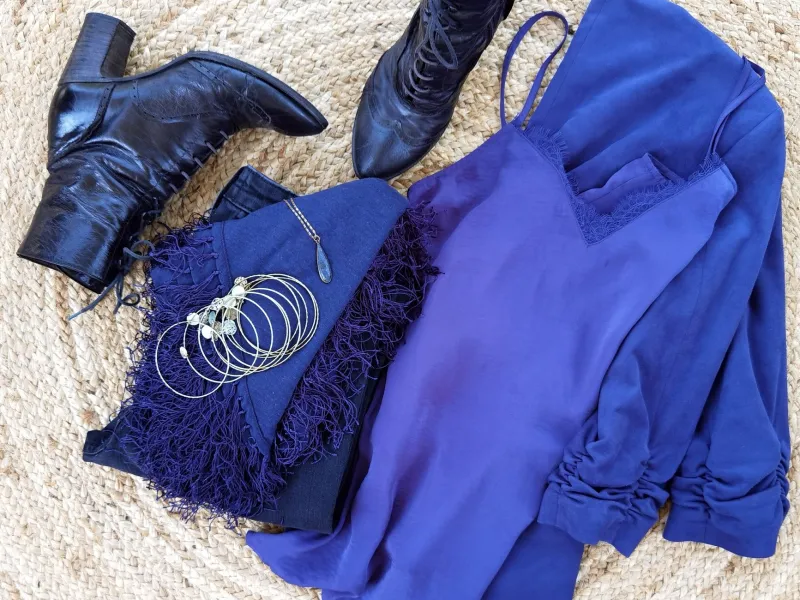
The Getting-Dressed Cheat Code: How to Build a Personal Style Reference That Actually Works
Photo: woman organizing wardrobe with notebook writing style notes flat lay, via ik.imagekit.io
Let's be honest: most of us have a complicated relationship with our closets. We own plenty of clothes, we've made plenty of purchases we were sure were going to change everything, and yet somehow the morning scramble still happens. You're standing in front of a full rack of options feeling like you have nothing to wear — again.
Here's the thing nobody really talks about: the problem usually isn't the clothes. It's the lack of a system.
Not a rigid, color-coded spreadsheet that takes three hours to maintain. Not a minimalist purge that leaves you with six items and a lot of regret. We're talking about something way more useful — a personal style reference that functions like a cheat code for your wardrobe. A living document that captures what actually works for your body, your life, and your daily context.
Once you build it, getting dressed stops feeling like a guessing game.
What a Personal Style Reference Actually Is
Think of it as your wardrobe's operating manual. It's the place where you store all the information about yourself that you currently keep in your head — or worse, forget entirely every time you're standing in a dressing room wondering if those wide-leg trousers are going to work.
A good personal style reference includes a few key components:
- Your actual measurements (not your tag size — your real numbers)
- Outfit formulas that have worked for you in the past
- The contexts where you feel most confident and what you were wearing
- Your seasonal preferences and how your style shifts throughout the year
- Fit notes for specific brands or cuts
You can keep this in a Notes app, a Google Doc, a Notion page, or even a physical notebook. The format doesn't matter. What matters is that it's specific, honest, and actually yours.
Start With Your Measurements — All of Them
This step feels tedious, but it is genuinely the foundation of everything else. Not just your chest, waist, and hips — though yes, those too. We're also talking about your inseam, your shoulder width, the distance from your shoulder to your natural waist, and your rise preference (how high or low you like your pants to sit).
Why? Because these numbers tell you things that size tags never will. They explain why that blazer that fits your shoulders swamps your torso, or why a size 8 in one brand fits like a 4 in another. When you know your measurements, you stop blaming your body for fit problems and start understanding the actual geometry at play.
Bonus: having these numbers on hand makes online shopping dramatically less of a gamble. Before you return another pair of jeans because they just "didn't work," check the brand's size chart against your measurements. You'll start making much better calls before checkout.
Log Your Outfit Wins (Yes, Actually)
This is the part people skip, and it's the most valuable part of the whole system.
Every time you put on an outfit and feel genuinely good — not just acceptable, but actually like yourself — write it down. Note what you wore, what the occasion was, and if you can, what made it click. Was it the proportion? The color combination? The fact that everything was the same fabric weight?
Over time, these notes reveal patterns you wouldn't otherwise notice. Maybe every outfit you love involves a tucked-in top. Maybe you always feel off when you wear synthetic fabrics, no matter how cute the piece is. Maybe your best looks always involve one oversized element balanced by something fitted.
These are your personal outfit formulas, and they're worth more than any trend report.
Map Your Life Contexts — Honestly
One of the biggest reasons people feel like their wardrobe "doesn't work" is that they're not dressing for the life they actually have. They've got a closet full of going-out pieces and a schedule that's 80% work-from-home and weekend errands. Or they've got lots of casual basics but nothing that works for the occasional client dinner or wedding.
In your style reference, map out the actual contexts of your week. Not the life you wish you had — the one you're living right now. Break it down:
- Daily default: What does a typical Tuesday actually look like for you?
- Elevated casual: Brunch, a casual work meeting, running into people you want to impress at Whole Foods
- Professional: Meetings, presentations, anything where you need to signal credibility
- Special occasions: Weddings, dinners out, events
- Active/errand mode: The gym, grocery runs, airport travel
Once you've mapped these out, rate how well your current wardrobe serves each one. You might find that three of your five contexts are totally covered and two have major gaps. That's useful information. That's what tells you what to actually shop for next time — instead of just buying whatever catches your eye.
Track Your Seasonal Shifts
Your style doesn't stay static across the year, and your reference shouldn't either. A lot of people find that their confidence and their aesthetic shift noticeably with the seasons — more layered and cozy in fall, brighter and looser in summer, more polished in spring.
Note what you gravitate toward each season and what you consistently avoid. Do you always regret buying white in winter because you never actually wear it? Do you reach for the same three sweaters every October? These patterns are worth capturing, especially because they'll save you from impulse purchases that seem great in the store but never get worn.
Seasonal notes also help you plan smarter. If you know you love linen in July but feel weird in it by September, you can time your end-of-season sales shopping accordingly.
The Confidence Context Map
Here's a slightly different angle on the whole thing: instead of just logging what you wore, start noting how you felt. Specifically, note the moments when you walked into a room and felt genuinely at ease in your own skin.
Was it a specific color? A particular silhouette? The fact that you were wearing something you'd worn a dozen times and knew worked? Confidence in getting dressed is almost never random — it's the result of familiarity, fit, and alignment between what you're wearing and where you are.
When you start mapping these moments, you build a picture of your personal confidence code. And once you know it, you can recreate it on purpose.
Keep It Simple Enough to Actually Use
The biggest mistake people make when building any kind of organizational system is overcomplicating it until it becomes another thing they have to maintain. Keep your style reference lean. Update it when something new clicks or when you notice a pattern. Don't force yourself to log every single outfit — just the ones that feel significant.
This isn't a fashion diary. It's a functional tool. The goal is to make getting dressed faster, more intentional, and a lot less stressful — so you can spend that recovered time and mental energy on literally anything else.
Your wardrobe already has more potential than you're using. You just need a better map to navigate it.