When to Let a Trend Go: Reading the Signs Before Your Wardrobe Gets Left Behind
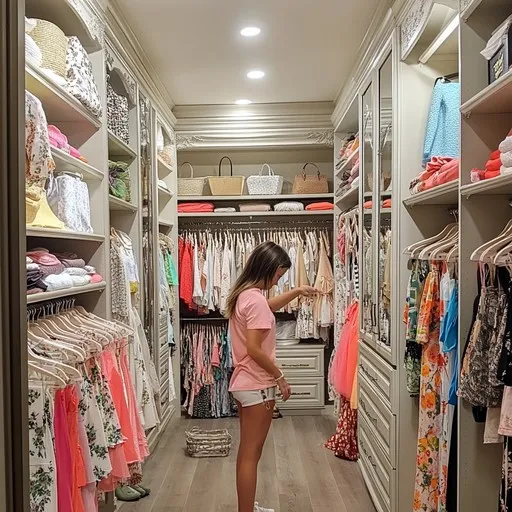
Photo: woman sorting through colorful clothing in a bright modern closet, via images.stockcake.com
There's a very specific feeling that hits when you pull something out of your closet and think, oh no. Not because the piece is ugly — it might have been genuinely great — but because something has shifted. The cultural moment it belonged to has quietly closed, and the item is still sitting there, frozen in time like a fashion time capsule you didn't mean to create.
The good news? You don't have to wait for that cringe moment to arrive. Learning how to read a trend's expiration date before it hits is one of the most underrated styling skills out there — and it has nothing to do with following rules or playing it safe.
Trends Have a Lifecycle. Here's What It Actually Looks Like.
Fashion moves in cycles, and those cycles are pretty predictable once you know what to look for. A trend usually starts in a niche space — a subculture, a runway show, a handful of influencers with very specific aesthetics. Then it trickles into the mainstream. Then it hits fast fashion. Then it's everywhere. Then it's over.
The tricky part is that "everywhere" and "over" can feel almost simultaneous. By the time a trend is saturating your Instagram feed and showing up at Target, you're often already past the sweet spot of wearing it with full confidence.
This doesn't mean you missed the window — it means you need to be more intentional about how you wear it, not just whether you wear it.
The Difference Between a Trend Piece and a Timeless Piece
Not all clothes age the same way, and that's actually the whole point. Some pieces carry a strong timestamp — they're designed to feel of-the-moment, which is exactly why they're exciting. Others are built to transcend seasons.
A good rule of thumb: if the silhouette, color, or detail is so specific to a cultural moment that it reads like a costume years later, it's a trend piece. Think early-2010s peplum tops, mid-2000s low-rise jeans the first time around, or the ultra-millennial pink phase. These pieces were fun. They were real. But they're also deeply coded.
Timeless pieces, on the other hand, tend to be defined by proportion and simplicity rather than novelty. A well-cut blazer, a great white tee, straight-leg trousers — these things have cultural staying power because they don't announce themselves as belonging to a specific year.
The goal isn't to only own timeless pieces. The goal is to know which category something falls into before you buy it, so you can make a conscious choice.
How to Evaluate a Trend Before You Commit
Before adding a trend-forward piece to your cart, run it through this quick mental checklist:
1. Is this trend being driven by nostalgia or by something genuinely new? Nostalgia trends (like Y2K or '90s minimalism making comebacks) tend to have longer legs because they're grounded in something with proven cultural staying power. Trends that feel completely invented from scratch can burn out faster.
2. Can you style it with at least three things you already own? If a piece only works in one very specific context, it's going to feel limiting fast — and limited-wear items are the first to feel dated.
3. Does it fit your actual life, not just your aspirational one? A trend only works for you if it makes sense in the context of your day-to-day. Buying into a trend that doesn't match how you actually move through the world means it'll sit unworn — and eventually feel like a relic.
4. Are you drawn to it because it genuinely excites you, or because you're afraid of missing out? FOMO-driven purchases almost always end up at the back of the closet. If the appeal is mostly social pressure, that's a sign the trend is already past its peak for you, even if it's still technically current.
The "Still Wearing It" Test
Here's a brutally honest diagnostic for pieces already in your wardrobe: ask yourself when you last reached for it without overthinking it. If you have to talk yourself into wearing something — if you keep almost wearing it and then changing your mind — that hesitation is information.
Sometimes that hesitation is about fit or comfort. But sometimes it's because some part of your brain has already clocked that the piece feels off in a way you haven't consciously named yet. Trust that instinct. Your gut usually knows before your brain catches up.
You Can Still Wear Trends Without Looking Dated
Here's the part nobody talks about enough: the expiration date of a trend isn't universal. It's personal.
Some people pull off pieces from past trend cycles constantly and look incredible doing it — not because they're oblivious, but because they've made the piece theirs. They've styled it with enough personal context that it reads as a choice rather than a leftover.
The trick is grounding. Pair a heavily trend-coded piece with things that are clearly intentional and current — a great pair of jeans, clean sneakers, a minimal bag. Let the rest of your outfit do the work of communicating that you know exactly what you're doing.
When something feels like a deliberate throwback or a personal signature, it stops feeling dated. It starts feeling like style.
Knowing When to Actually Let Go
All that said, some pieces really do need to go. The signs are pretty clear: you actively avoid wearing it, you feel self-conscious every time you do, or it just doesn't connect to anything else you own anymore.
Letting go of a trend piece isn't a failure — it's just the natural end of a fashion relationship. Donate it, sell it, pass it to a friend who's in a different moment of their style journey. Clearing space for what actually works for you right now is how your wardrobe stays alive instead of becoming a museum.
The best closets aren't the ones with the most current pieces. They're the ones where everything in them has a reason to be there.